Surah 14 · 52 verses · Free PDF to print
Surah Ibrahim PDF
IbrāhīmAbrahamسورة ابراهيم
Download Surah Ibrahim as a PDF: all 52 verses of Ibrahim (Abraham) in the Arabic of the Madinah muṣḥaf, each with its transliteration and the Saheeh International English translation, laid out in black on white to print or keep on your phone. Choose the version you need below; there is nothing to sign up for.
Each opens the print window: choose “Save as PDF” to keep a copy, or print it.
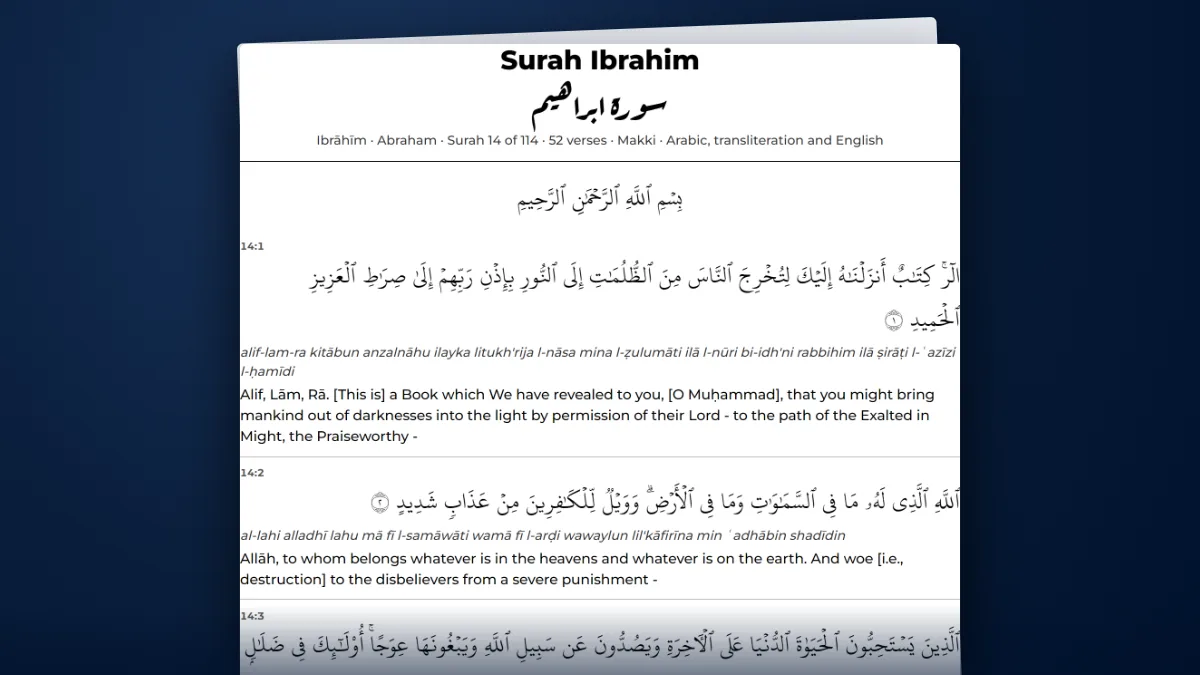
What is in the Surah Ibrahim PDF
The PDF is made from this page, from the same text as the rest of the site: the King Fahd Complex muṣḥaf (Ḥafṣ ʿan ʿĀṣim), the Saheeh International translation and Quran.com’s word-by-word transliteration. Nothing in it is retyped, so the Arabic is exactly as the muṣḥaf has it, in the font the King Fahd Complex made for it.
| In the PDF | Surah Ibrahim |
|---|---|
| Heading | Surah Ibrahim, سورة ابراهيم, Ibrāhīm (Abraham), surah 14 of 114 |
| Verses | 52 verses, 14:1 to 14:52, with the Bismillah above verse 1 |
| Each verse | Its number, the Arabic, then the transliteration and the English, as you choose |
| Juz | Juz 13 |
| In the muṣḥaf | Pages 255 to 261 of the 604-page Madinah muṣḥaf |
| Arabic words | 830 |
| At the foot | The page’s address, so you can find it again |
Each verse is printed whole, never split across two pages, and the buttons, player and menus are left out: only the surah is printed.
How to download and print Surah Ibrahim as a PDF
- Choose a version. Arabic, transliteration and English; Arabic and English; or Arabic only. Each button opens your browser’s print window with the surah laid out for paper.
- On a computer, set the printer (Destination) to “Save as PDF” and press Save. The file is named Surah Ibrahim.
- On an Android phone, choose “Save as PDF” as the printer, then the download button.
- On an iPhone or iPad, the print options open: use Share there to save the PDF to Files or send it, or pick a printer.
- To print on paper, choose your printer instead. A4 and US Letter both work, in portrait, and black and white is enough.
With the transliteration and English under every verse, the full version of Surah Ibrahim is longer than the Arabic alone; choose “Arabic only” if you want the fewest pages.
Read Surah Ibrahim before you print it
بِسۡمِ ٱللَّهِ ٱلرَّحۡمَٰنِ ٱلرَّحِيمِ
الٓرۚ كِتَٰبٌ أَنزَلۡنَٰهُ إِلَيۡكَ لِتُخۡرِجَ ٱلنَّاسَ مِنَ ٱلظُّلُمَٰتِ إِلَى ٱلنُّورِ بِإِذۡنِ رَبِّهِمۡ إِلَىٰ صِرَٰطِ ٱلۡعَزِيزِ ٱلۡحَمِيدِ ١
alif-lam-ra kitābun anzalnāhu ilayka litukh'rija l-nāsa mina l-ẓulumāti ilā l-nūri bi-idh'ni rabbihim ilā ṣirāṭi l-ʿazīzi l-ḥamīdi
Alif, Lām, Rā. [This is] a Book which We have revealed to you, [O Muḥammad], that you might bring mankind out of darknesses into the light by permission of their Lord - to the path of the Exalted in Might, the Praiseworthy -
ٱللَّهِ ٱلَّذِي لَهُۥ مَا فِي ٱلسَّمَٰوَٰتِ وَمَا فِي ٱلۡأَرۡضِۗ وَوَيۡلٞ لِّلۡكَٰفِرِينَ مِنۡ عَذَابٖ شَدِيدٍ ٢
al-lahi alladhī lahu mā fī l-samāwāti wamā fī l-arḍi wawaylun lil'kāfirīna min ʿadhābin shadīdin
Allāh, to whom belongs whatever is in the heavens and whatever is on the earth. And woe [i.e., destruction] to the disbelievers from a severe punishment -
ٱلَّذِينَ يَسۡتَحِبُّونَ ٱلۡحَيَوٰةَ ٱلدُّنۡيَا عَلَى ٱلۡأٓخِرَةِ وَيَصُدُّونَ عَن سَبِيلِ ٱللَّهِ وَيَبۡغُونَهَا عِوَجًاۚ أُوْلَٰٓئِكَ فِي ضَلَٰلِۭ بَعِيدٖ ٣
alladhīna yastaḥibbūna l-ḥayata l-dun'yā ʿalā l-ākhirati wayaṣuddūna ʿan sabīli l-lahi wayabghūnahā ʿiwajan ulāika fī ḍalālin baʿīdin
The ones who prefer the worldly life over the Hereafter and avert [people] from the way of Allāh, seeking to make it [seem] deviant. Those are in extreme error.
وَمَآ أَرۡسَلۡنَا مِن رَّسُولٍ إِلَّا بِلِسَانِ قَوۡمِهِۦ لِيُبَيِّنَ لَهُمۡۖ فَيُضِلُّ ٱللَّهُ مَن يَشَآءُ وَيَهۡدِي مَن يَشَآءُۚ وَهُوَ ٱلۡعَزِيزُ ٱلۡحَكِيمُ ٤
wamā arsalnā min rasūlin illā bilisāni qawmihi liyubayyina lahum fayuḍillu l-lahu man yashāu wayahdī man yashāu wahuwa l-ʿazīzu l-ḥakīmu
And We did not send any messenger except [speaking] in the language of his people to state clearly for them, and Allāh sends astray [thereby] whom He wills and guides whom He wills. And He is the Exalted in Might, the Wise.
وَلَقَدۡ أَرۡسَلۡنَا مُوسَىٰ بِـَٔايَٰتِنَآ أَنۡ أَخۡرِجۡ قَوۡمَكَ مِنَ ٱلظُّلُمَٰتِ إِلَى ٱلنُّورِ وَذَكِّرۡهُم بِأَيَّىٰمِ ٱللَّهِۚ إِنَّ فِي ذَٰلِكَ لَأٓيَٰتٖ لِّكُلِّ صَبَّارٖ شَكُورٖ ٥
walaqad arsalnā mūsā biāyātinā an akhrij qawmaka mina l-ẓulumāti ilā l-nūri wadhakkir'hum bi-ayyāmi l-lahi inna fī dhālika laāyātin likulli ṣabbārin shakūrin
And We certainly sent Moses with Our signs, [saying], "Bring out your people from darknesses into the light and remind them of the days of Allāh." Indeed in that are signs for everyone patient and grateful.
وَإِذۡ قَالَ مُوسَىٰ لِقَوۡمِهِ ٱذۡكُرُواْ نِعۡمَةَ ٱللَّهِ عَلَيۡكُمۡ إِذۡ أَنجَىٰكُم مِّنۡ ءَالِ فِرۡعَوۡنَ يَسُومُونَكُمۡ سُوٓءَ ٱلۡعَذَابِ وَيُذَبِّحُونَ أَبۡنَآءَكُمۡ وَيَسۡتَحۡيُونَ نِسَآءَكُمۡۚ وَفِي ذَٰلِكُم بَلَآءٞ مِّن رَّبِّكُمۡ عَظِيمٞ ٦
wa-idh qāla mūsā liqawmihi udh'kurū niʿ'mata l-lahi ʿalaykum idh anjākum min āli fir'ʿawna yasūmūnakum sūa l-ʿadhābi wayudhabbiḥūna abnāakum wayastaḥyūna nisāakum wafī dhālikum balāon min rabbikum ʿaẓīmun
And [recall, O Children of Israel], when Moses said to his people, "Remember the favor of Allāh upon you when He saved you from the people of Pharaoh, who were afflicting you with the worst torment and were slaughtering your [newborn] sons and keeping your females alive. And in that was a great trial from your Lord.
وَإِذۡ تَأَذَّنَ رَبُّكُمۡ لَئِن شَكَرۡتُمۡ لَأَزِيدَنَّكُمۡۖ وَلَئِن كَفَرۡتُمۡ إِنَّ عَذَابِي لَشَدِيدٞ ٧
wa-idh ta-adhana rabbukum la-in shakartum la-azīdannakum wala-in kafartum inna ʿadhābī lashadīdun
And [remember] when your Lord proclaimed, 'If you are grateful, I will surely increase you [in favor]; but if you deny, indeed, My punishment is severe.'"
وَقَالَ مُوسَىٰٓ إِن تَكۡفُرُوٓاْ أَنتُمۡ وَمَن فِي ٱلۡأَرۡضِ جَمِيعٗا فَإِنَّ ٱللَّهَ لَغَنِيٌّ حَمِيدٌ ٨
waqāla mūsā in takfurū antum waman fī l-arḍi jamīʿan fa-inna l-laha laghaniyyun ḥamīdun
And Moses said, "If you should disbelieve, you and whoever is on the earth entirely - indeed, Allāh is Free of need and Praiseworthy."
أَلَمۡ يَأۡتِكُمۡ نَبَؤُاْ ٱلَّذِينَ مِن قَبۡلِكُمۡ قَوۡمِ نُوحٖ وَعَادٖ وَثَمُودَ وَٱلَّذِينَ مِنۢ بَعۡدِهِمۡ لَا يَعۡلَمُهُمۡ إِلَّا ٱللَّهُۚ جَآءَتۡهُمۡ رُسُلُهُم بِٱلۡبَيِّنَٰتِ فَرَدُّوٓاْ أَيۡدِيَهُمۡ فِيٓ أَفۡوَٰهِهِمۡ وَقَالُوٓاْ إِنَّا كَفَرۡنَا بِمَآ أُرۡسِلۡتُم بِهِۦ وَإِنَّا لَفِي شَكّٖ مِّمَّا تَدۡعُونَنَآ إِلَيۡهِ مُرِيبٖ ٩
alam yatikum naba-u alladhīna min qablikum qawmi nūḥin waʿādin wathamūda wa-alladhīna min baʿdihim lā yaʿlamuhum illā l-lahu jāathum rusuluhum bil-bayināti faraddū aydiyahum fī afwāhihim waqālū innā kafarnā bimā ur'sil'tum bihi wa-innā lafī shakkin mimmā tadʿūnanā ilayhi murībin
Has there not reached you the news of those before you - the people of Noah and ʿAad and Thamūd and those after them? No one knows them [i.e., their number] but Allāh. Their messengers brought them clear proofs, but they returned their hands to their mouths and said, "Indeed, we disbelieve in that with which you have been sent, and indeed we are, about that to which you invite us, in disquieting doubt."
۞ قَالَتۡ رُسُلُهُمۡ أَفِي ٱللَّهِ شَكّٞ فَاطِرِ ٱلسَّمَٰوَٰتِ وَٱلۡأَرۡضِۖ يَدۡعُوكُمۡ لِيَغۡفِرَ لَكُم مِّن ذُنُوبِكُمۡ وَيُؤَخِّرَكُمۡ إِلَىٰٓ أَجَلٖ مُّسَمّٗىۚ قَالُوٓاْ إِنۡ أَنتُمۡ إِلَّا بَشَرٞ مِّثۡلُنَا تُرِيدُونَ أَن تَصُدُّونَا عَمَّا كَانَ يَعۡبُدُ ءَابَآؤُنَا فَأۡتُونَا بِسُلۡطَٰنٖ مُّبِينٖ ١٠
qālat rusuluhum afī l-lahi shakkun fāṭiri l-samāwāti wal-arḍi yadʿūkum liyaghfira lakum min dhunūbikum wayu-akhirakum ilā ajalin musamman qālū in antum illā basharun mith'lunā turīdūna an taṣuddūnā ʿammā kāna yaʿbudu ābāunā fatūnā bisul'ṭānin mubīnin
Their messengers said, "Can there be doubt about Allāh, Creator of the heavens and earth? He invites you that He may forgive you of your sins, and He delays you [i.e., your death] for a specified term." They said, "You are not but men like us who wish to avert us from what our fathers were worshipping. So bring us a clear authority [i.e., evidence]."
قَالَتۡ لَهُمۡ رُسُلُهُمۡ إِن نَّحۡنُ إِلَّا بَشَرٞ مِّثۡلُكُمۡ وَلَٰكِنَّ ٱللَّهَ يَمُنُّ عَلَىٰ مَن يَشَآءُ مِنۡ عِبَادِهِۦۖ وَمَا كَانَ لَنَآ أَن نَّأۡتِيَكُم بِسُلۡطَٰنٍ إِلَّا بِإِذۡنِ ٱللَّهِۚ وَعَلَى ٱللَّهِ فَلۡيَتَوَكَّلِ ٱلۡمُؤۡمِنُونَ ١١
qālat lahum rusuluhum in naḥnu illā basharun mith'lukum walākinna l-laha yamunnu ʿalā man yashāu min ʿibādihi wamā kāna lanā an natiyakum bisul'ṭānin illā bi-idh'ni l-lahi waʿalā l-lahi falyatawakkali l-mu'minūna
Their messengers said to them, "We are only men like you, but Allāh confers favor upon whom He wills of His servants. It has never been for us to bring you evidence except by permission of Allāh. And upon Allāh let the believers rely.
وَمَا لَنَآ أَلَّا نَتَوَكَّلَ عَلَى ٱللَّهِ وَقَدۡ هَدَىٰنَا سُبُلَنَاۚ وَلَنَصۡبِرَنَّ عَلَىٰ مَآ ءَاذَيۡتُمُونَاۚ وَعَلَى ٱللَّهِ فَلۡيَتَوَكَّلِ ٱلۡمُتَوَكِّلُونَ ١٢
wamā lanā allā natawakkala ʿalā l-lahi waqad hadānā subulanā walanaṣbiranna ʿalā mā ādhaytumūnā waʿalā l-lahi falyatawakkali l-mutawakilūna
And why should we not rely upon Allāh while He has guided us to our [good] ways. And we will surely be patient against whatever harm you should cause us. And upon Allāh let those who would rely [indeed] rely."
وَقَالَ ٱلَّذِينَ كَفَرُواْ لِرُسُلِهِمۡ لَنُخۡرِجَنَّكُم مِّنۡ أَرۡضِنَآ أَوۡ لَتَعُودُنَّ فِي مِلَّتِنَاۖ فَأَوۡحَىٰٓ إِلَيۡهِمۡ رَبُّهُمۡ لَنُهۡلِكَنَّ ٱلظَّٰلِمِينَ ١٣
waqāla alladhīna kafarū lirusulihim lanukh'rijannakum min arḍinā aw lataʿūdunna fī millatinā fa-awḥā ilayhim rabbuhum lanuh'likanna l-ẓālimīna
And those who disbelieved said to their messengers, "We will surely drive you out of our land, or you must return to our religion." So their Lord inspired to them, "We will surely destroy the wrongdoers.
وَلَنُسۡكِنَنَّكُمُ ٱلۡأَرۡضَ مِنۢ بَعۡدِهِمۡۚ ذَٰلِكَ لِمَنۡ خَافَ مَقَامِي وَخَافَ وَعِيدِ ١٤
walanus'kinannakumu l-arḍa min baʿdihim dhālika liman khāfa maqāmī wakhāfa waʿīdi
And We will surely cause you to dwell in the land after them. That is for he who fears My position and fears My threat."
وَٱسۡتَفۡتَحُواْ وَخَابَ كُلُّ جَبَّارٍ عَنِيدٖ ١٥
wa-is'taftaḥū wakhāba kullu jabbārin ʿanīdin
And they requested decision [i.e., victory from Allāh], and disappointed, [therefore], was every obstinate tyrant.
مِّن وَرَآئِهِۦ جَهَنَّمُ وَيُسۡقَىٰ مِن مَّآءٖ صَدِيدٖ ١٦
min warāihi jahannamu wayus'qā min māin ṣadīdin
Before him is Hell, and he will be given a drink of purulent water.
يَتَجَرَّعُهُۥ وَلَا يَكَادُ يُسِيغُهُۥ وَيَأۡتِيهِ ٱلۡمَوۡتُ مِن كُلِّ مَكَانٖ وَمَا هُوَ بِمَيِّتٖۖ وَمِن وَرَآئِهِۦ عَذَابٌ غَلِيظٞ ١٧
yatajarraʿuhu walā yakādu yusīghuhu wayatīhi l-mawtu min kulli makānin wamā huwa bimayyitin wamin warāihi ʿadhābun ghalīẓun
He will gulp it but will hardly [be able to] swallow it. And death will come to him from everywhere, but he is not to die. And before him is a massive punishment.
مَّثَلُ ٱلَّذِينَ كَفَرُواْ بِرَبِّهِمۡۖ أَعۡمَٰلُهُمۡ كَرَمَادٍ ٱشۡتَدَّتۡ بِهِ ٱلرِّيحُ فِي يَوۡمٍ عَاصِفٖۖ لَّا يَقۡدِرُونَ مِمَّا كَسَبُواْ عَلَىٰ شَيۡءٖۚ ذَٰلِكَ هُوَ ٱلضَّلَٰلُ ٱلۡبَعِيدُ ١٨
mathalu alladhīna kafarū birabbihim aʿmāluhum karamādin ish'taddat bihi l-rīḥu fī yawmin ʿāṣifin lā yaqdirūna mimmā kasabū ʿalā shayin dhālika huwa l-ḍalālu l-baʿīdu
The example of those who disbelieve in their Lord is [that] their deeds are like ashes which the wind blows forcefully on a stormy day; they are unable [to keep] from what they earned a [single] thing. That is what is extreme error.
أَلَمۡ تَرَ أَنَّ ٱللَّهَ خَلَقَ ٱلسَّمَٰوَٰتِ وَٱلۡأَرۡضَ بِٱلۡحَقِّۚ إِن يَشَأۡ يُذۡهِبۡكُمۡ وَيَأۡتِ بِخَلۡقٖ جَدِيدٖ ١٩
alam tara anna l-laha khalaqa l-samāwāti wal-arḍa bil-ḥaqi in yasha yudh'hib'kum wayati bikhalqin jadīdin
Have you not seen [i.e., considered] that Allāh created the heavens and the earth in truth? If He wills, He can do away with you and produce a new creation.
وَمَا ذَٰلِكَ عَلَى ٱللَّهِ بِعَزِيزٖ ٢٠
wamā dhālika ʿalā l-lahi biʿazīzin
And that is not difficult for Allāh.
وَبَرَزُواْ لِلَّهِ جَمِيعٗا فَقَالَ ٱلضُّعَفَٰٓؤُاْ لِلَّذِينَ ٱسۡتَكۡبَرُوٓاْ إِنَّا كُنَّا لَكُمۡ تَبَعٗا فَهَلۡ أَنتُم مُّغۡنُونَ عَنَّا مِنۡ عَذَابِ ٱللَّهِ مِن شَيۡءٖۚ قَالُواْ لَوۡ هَدَىٰنَا ٱللَّهُ لَهَدَيۡنَٰكُمۡۖ سَوَآءٌ عَلَيۡنَآ أَجَزِعۡنَآ أَمۡ صَبَرۡنَا مَا لَنَا مِن مَّحِيصٖ ٢١
wabarazū lillahi jamīʿan faqāla l-ḍuʿafāu lilladhīna is'takbarū innā kunnā lakum tabaʿan fahal antum mugh'nūna ʿannā min ʿadhābi l-lahi min shayin qālū law hadānā l-lahu lahadaynākum sawāon ʿalaynā ajaziʿ'nā am ṣabarnā mā lanā min maḥīṣin
And they will come out [for judgement] before Allāh all together, and the weak will say to those who were arrogant, "Indeed, we were your followers, so can you avail us anything against the punishment of Allāh?" They will say, "If Allāh had guided us, we would have guided you. It is all the same for us whether we show intolerance or are patient: there is for us no place of escape."
وَقَالَ ٱلشَّيۡطَٰنُ لَمَّا قُضِيَ ٱلۡأَمۡرُ إِنَّ ٱللَّهَ وَعَدَكُمۡ وَعۡدَ ٱلۡحَقِّ وَوَعَدتُّكُمۡ فَأَخۡلَفۡتُكُمۡۖ وَمَا كَانَ لِيَ عَلَيۡكُم مِّن سُلۡطَٰنٍ إِلَّآ أَن دَعَوۡتُكُمۡ فَٱسۡتَجَبۡتُمۡ لِيۖ فَلَا تَلُومُونِي وَلُومُوٓاْ أَنفُسَكُمۖ مَّآ أَنَا۠ بِمُصۡرِخِكُمۡ وَمَآ أَنتُم بِمُصۡرِخِيَّ إِنِّي كَفَرۡتُ بِمَآ أَشۡرَكۡتُمُونِ مِن قَبۡلُۗ إِنَّ ٱلظَّٰلِمِينَ لَهُمۡ عَذَابٌ أَلِيمٞ ٢٢
waqāla l-shayṭānu lammā quḍiya l-amru inna l-laha waʿadakum waʿda l-ḥaqi wawaʿadttukum fa-akhlaftukum wamā kāna liya ʿalaykum min sul'ṭānin illā an daʿawtukum fa-is'tajabtum lī falā talūmūnī walūmū anfusakum mā anā bimuṣ'rikhikum wamā antum bimuṣ'rikhiyya innī kafartu bimā ashraktumūni min qablu inna l-ẓālimīna lahum ʿadhābun alīmun
And Satan will say when the matter has been concluded, "Indeed, Allāh had promised you the promise of truth. And I promised you, but I betrayed you. But I had no authority over you except that I invited you, and you responded to me. So do not blame me; but blame yourselves. I cannot be called to your aid, nor can you be called to my aid. Indeed, I deny your association of me [with Allāh] before. Indeed, for the wrongdoers is a painful punishment."
وَأُدۡخِلَ ٱلَّذِينَ ءَامَنُواْ وَعَمِلُواْ ٱلصَّٰلِحَٰتِ جَنَّٰتٖ تَجۡرِي مِن تَحۡتِهَا ٱلۡأَنۡهَٰرُ خَٰلِدِينَ فِيهَا بِإِذۡنِ رَبِّهِمۡۖ تَحِيَّتُهُمۡ فِيهَا سَلَٰمٌ ٢٣
wa-ud'khila alladhīna āmanū waʿamilū l-ṣāliḥāti jannātin tajrī min taḥtihā l-anhāru khālidīna fīhā bi-idh'ni rabbihim taḥiyyatuhum fīhā salāmun
And those who believed and did righteous deeds will be admitted to gardens beneath which rivers flow, abiding eternally therein by permission of their Lord; and their greeting therein will be, "Peace!"
أَلَمۡ تَرَ كَيۡفَ ضَرَبَ ٱللَّهُ مَثَلٗا كَلِمَةٗ طَيِّبَةٗ كَشَجَرَةٖ طَيِّبَةٍ أَصۡلُهَا ثَابِتٞ وَفَرۡعُهَا فِي ٱلسَّمَآءِ ٢٤
alam tara kayfa ḍaraba l-lahu mathalan kalimatan ṭayyibatan kashajaratin ṭayyibatin aṣluhā thābitun wafarʿuhā fī l-samāi
Have you not considered how Allāh presents an example, [making] a good word like a good tree, whose root is firmly fixed and its branches [high] in the sky?
Loading verses 25 to 52…
Memorise and study Surah Ibrahim with the PDF
The Quran is divided into 558 rukūʿ, sections of a few verses each. Surah Ibrahim has 7 of them, a natural size to learn and revise one at a time:
| Rukūʿ | Verses | It opens |
|---|---|---|
| Section 1 | Verses 1–6 | Alif, Lām, Rā. [This is] a Book which We… |
| Section 2 | Verses 7–12 | And [remember] when your Lord proclaimed, 'If you are… |
| Section 3 | Verses 13–21 | And those who disbelieved said to their messengers, "We… |
| Section 4 | Verses 22–27 | And Satan will say when the matter has been… |
| Section 5 | Verses 28–34 | Have you not considered those who exchanged the favor… |
| Section 6 | Verses 35–41 | And [mention, O Muḥammad], when Abraham said, "My Lord,… |
| Section 7 | Verses 42–52 | And never think that Allāh is unaware of what… |
- Learn with the sound. Print the full version and follow it while the recitation plays on this page. 5 reciters are on the site.
- Lean on the transliteration less as you go. Once a section is familiar, print the Arabic-only version and read from that.
- Check a verse word by word. Each verse has its own page with every word’s meaning and recording, from Surah Ibrahim verse 1 onwards. Open it
About Surah Ibrahim
Ibrāhīm is the Arabic name of Abraham, after his prayer in verses 35–41 for the city to be made safe and for his descendants settled beside the Sacred House.
It teaches that every messenger was sent speaking the language of his own people, and recalls Moses (Mūsā) reminding his people of Allah’s favours and of the promise to give more to those who are grateful. Well-known passages include the parable of a good word as a good tree with firm roots and branches reaching the sky, and a scene on the Day of Judgement in which Satan disowns those who followed him.
For scholar reviewA summary written for QuranSurah: not part of the Quran, and still to be reviewed by a named scholar.
- Its place
- Surah 14 of 114
- Verses
- 52
- Revealed in
- Makkah (Makki)
- Juz
- 13
More about Surah Ibrahim, with its well-known verses and duas
Questions about Surah Ibrahim PDF
Is the Surah Ibrahim PDF free?
Yes. The PDF is made in your own browser from this page: there is no sign-up, no email address to give and no advert in it.
How this page works
What is in the Surah Ibrahim PDF?
All 52 verses of Ibrahim in the Arabic of the King Fahd Complex muṣḥaf, each with its transliteration and the Saheeh International translation, under a heading with its name in Arabic and English. The “Arabic and English” and “Arabic only” versions leave out what you do not need.
How this page works
Can I print Surah Ibrahim in Arabic only?
Yes: choose “Arabic only”. The PDF then has the muṣḥaf’s text alone, verse by verse, each with its number.
How this page works
How many pages is Surah Ibrahim in the Quran?
Surah Ibrahim is on pages 255 to 261 of the 604-page Madinah muṣḥaf (7 pages), in juz 13.
Worked out from the muṣḥaf’s own data
How many verses are in Surah Ibrahim?
Surah Ibrahim has 52 verses (ayat), not counting the Bismillah before it.
Worked out from the muṣḥaf’s own data
Is Surah Ibrahim Makki or Madani?
Surah Ibrahim is a Makki surah: it is classed as revealed in Makkah.
Worked out from the muṣḥaf’s own data
Which juz is Surah Ibrahim in?
Surah Ibrahim is in juz 13, on pages 255 to 261 of the 604-page Madinah muṣḥaf.
Worked out from the muṣḥaf’s own data
Which number surah is Surah Ibrahim?
Surah Ibrahim is the 14th of the 114 surahs of the Quran.
Worked out from the muṣḥaf’s own data
How many words are in Surah Ibrahim?
Surah Ibrahim has 830 words in the Arabic of the Madinah muṣḥaf, counted word by word in Quran.com’s data.
Worked out from the muṣḥaf’s own data
Which surahs come before and after Surah Ibrahim?
Surah Raad (surah 13) comes before it and Surah Al Hijr (surah 15) after it.
Worked out from the muṣḥaf’s own data