Surah 39 · 75 verses · Free PDF to print
Surah Zumar PDF
Az-ZumarThe Troopsسورة الزمر
Download Surah Az Zumar as a PDF: all 75 verses of Az-Zumar (The Troops) in the Arabic of the Madinah muṣḥaf, each with its transliteration and the Saheeh International English translation, laid out in black on white to print or keep on your phone. Choose the version you need below; there is nothing to sign up for.
Each opens the print window: choose “Save as PDF” to keep a copy, or print it.
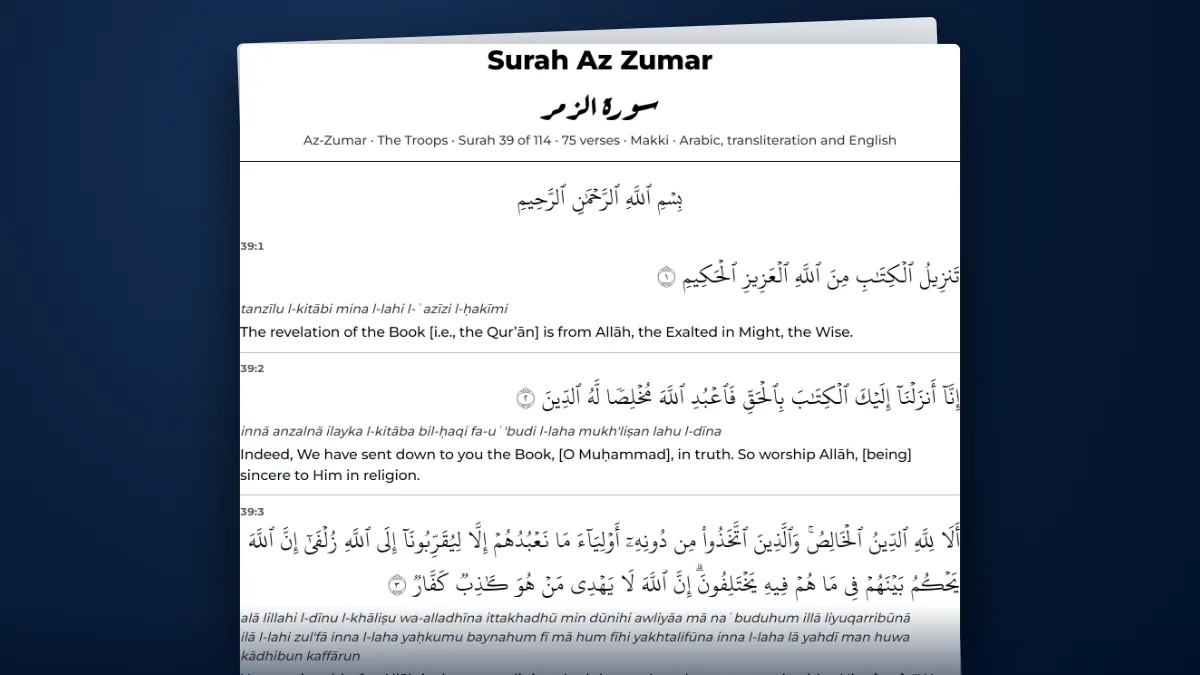
What is in the Surah Zumar PDF
The PDF is made from this page, from the same text as the rest of the site: the King Fahd Complex muṣḥaf (Ḥafṣ ʿan ʿĀṣim), the Saheeh International translation and Quran.com’s word-by-word transliteration. Nothing in it is retyped, so the Arabic is exactly as the muṣḥaf has it, in the font the King Fahd Complex made for it.
| In the PDF | Surah Az Zumar |
|---|---|
| Heading | Surah Az Zumar, سورة الزمر, Az-Zumar (The Troops), surah 39 of 114 |
| Verses | 75 verses, 39:1 to 39:75, with the Bismillah above verse 1 |
| Each verse | Its number, the Arabic, then the transliteration and the English, as you choose |
| Juz | Juz 23 and 24; the PDF marks where Juz 24 begins at verse 32 |
| In the muṣḥaf | Pages 458 to 467 of the 604-page Madinah muṣḥaf |
| Arabic words | 1,172 |
| At the foot | The page’s address, so you can find it again |
Each verse is printed whole, never split across two pages, and the buttons, player and menus are left out: only the surah is printed.
How to download and print Surah Az Zumar as a PDF
- Choose a version. Arabic, transliteration and English; Arabic and English; or Arabic only. Each button opens your browser’s print window with the surah laid out for paper.
- On a computer, set the printer (Destination) to “Save as PDF” and press Save. The file is named Surah Az Zumar.
- On an Android phone, choose “Save as PDF” as the printer, then the download button.
- On an iPhone or iPad, the print options open: use Share there to save the PDF to Files or send it, or pick a printer.
- To print on paper, choose your printer instead. A4 and US Letter both work, in portrait, and black and white is enough.
With the transliteration and English under every verse, the full version of Surah Az Zumar is longer than the Arabic alone; choose “Arabic only” if you want the fewest pages.
Read Surah Az Zumar before you print it
بِسۡمِ ٱللَّهِ ٱلرَّحۡمَٰنِ ٱلرَّحِيمِ
تَنزِيلُ ٱلۡكِتَٰبِ مِنَ ٱللَّهِ ٱلۡعَزِيزِ ٱلۡحَكِيمِ ١
tanzīlu l-kitābi mina l-lahi l-ʿazīzi l-ḥakīmi
The revelation of the Book [i.e., the Qur’ān] is from Allāh, the Exalted in Might, the Wise.
إِنَّآ أَنزَلۡنَآ إِلَيۡكَ ٱلۡكِتَٰبَ بِٱلۡحَقِّ فَٱعۡبُدِ ٱللَّهَ مُخۡلِصٗا لَّهُ ٱلدِّينَ ٢
innā anzalnā ilayka l-kitāba bil-ḥaqi fa-uʿ'budi l-laha mukh'liṣan lahu l-dīna
Indeed, We have sent down to you the Book, [O Muḥammad], in truth. So worship Allāh, [being] sincere to Him in religion.
أَلَا لِلَّهِ ٱلدِّينُ ٱلۡخَالِصُۚ وَٱلَّذِينَ ٱتَّخَذُواْ مِن دُونِهِۦٓ أَوۡلِيَآءَ مَا نَعۡبُدُهُمۡ إِلَّا لِيُقَرِّبُونَآ إِلَى ٱللَّهِ زُلۡفَىٰٓ إِنَّ ٱللَّهَ يَحۡكُمُ بَيۡنَهُمۡ فِي مَا هُمۡ فِيهِ يَخۡتَلِفُونَۗ إِنَّ ٱللَّهَ لَا يَهۡدِي مَنۡ هُوَ كَٰذِبٞ كَفَّارٞ ٣
alā lillahi l-dīnu l-khāliṣu wa-alladhīna ittakhadhū min dūnihi awliyāa mā naʿbuduhum illā liyuqarribūnā ilā l-lahi zul'fā inna l-laha yaḥkumu baynahum fī mā hum fīhi yakhtalifūna inna l-laha lā yahdī man huwa kādhibun kaffārun
Unquestionably, for Allāh is the pure religion. And those who take protectors besides Him [say], "We only worship them that they may bring us nearer to Allāh in position." Indeed, Allāh will judge between them concerning that over which they differ. Indeed, Allāh does not guide he who is a liar and [confirmed] disbeliever.
لَّوۡ أَرَادَ ٱللَّهُ أَن يَتَّخِذَ وَلَدٗا لَّٱصۡطَفَىٰ مِمَّا يَخۡلُقُ مَا يَشَآءُۚ سُبۡحَٰنَهُۥۖ هُوَ ٱللَّهُ ٱلۡوَٰحِدُ ٱلۡقَهَّارُ ٤
law arāda l-lahu an yattakhidha waladan la-iṣ'ṭafā mimmā yakhluqu mā yashāu sub'ḥānahu huwa l-lahu l-wāḥidu l-qahāru
If Allāh had intended to take a son, He could have chosen from what He creates whatever He willed. Exalted is He; He is Allāh, the One, the Prevailing.
خَلَقَ ٱلسَّمَٰوَٰتِ وَٱلۡأَرۡضَ بِٱلۡحَقِّۖ يُكَوِّرُ ٱلَّيۡلَ عَلَى ٱلنَّهَارِ وَيُكَوِّرُ ٱلنَّهَارَ عَلَى ٱلَّيۡلِۖ وَسَخَّرَ ٱلشَّمۡسَ وَٱلۡقَمَرَۖ كُلّٞ يَجۡرِي لِأَجَلٖ مُّسَمًّىۗ أَلَا هُوَ ٱلۡعَزِيزُ ٱلۡغَفَّٰرُ ٥
khalaqa l-samāwāti wal-arḍa bil-ḥaqi yukawwiru al-layla ʿalā l-nahāri wayukawwiru l-nahāra ʿalā al-layli wasakhara l-shamsa wal-qamara kullun yajrī li-ajalin musamman alā huwa l-ʿazīzu l-ghafāru
He created the heavens and earth in truth. He wraps the night over the day and wraps the day over the night and has subjected the sun and the moon, each running [its course] for a specified term. Unquestionably, He is the Exalted in Might, the Perpetual Forgiver.
خَلَقَكُم مِّن نَّفۡسٖ وَٰحِدَةٖ ثُمَّ جَعَلَ مِنۡهَا زَوۡجَهَا وَأَنزَلَ لَكُم مِّنَ ٱلۡأَنۡعَٰمِ ثَمَٰنِيَةَ أَزۡوَٰجٖۚ يَخۡلُقُكُمۡ فِي بُطُونِ أُمَّهَٰتِكُمۡ خَلۡقٗا مِّنۢ بَعۡدِ خَلۡقٖ فِي ظُلُمَٰتٖ ثَلَٰثٖۚ ذَٰلِكُمُ ٱللَّهُ رَبُّكُمۡ لَهُ ٱلۡمُلۡكُۖ لَآ إِلَٰهَ إِلَّا هُوَۖ فَأَنَّىٰ تُصۡرَفُونَ ٦
khalaqakum min nafsin wāḥidatin thumma jaʿala min'hā zawjahā wa-anzala lakum mina l-anʿāmi thamāniyata azwājin yakhluqukum fī buṭūni ummahātikum khalqan min baʿdi khalqin fī ẓulumātin thalāthin dhālikumu l-lahu rabbukum lahu l-mul'ku lā ilāha illā huwa fa-annā tuṣ'rafūna
He created you from one soul. Then He made from it its mate, and He produced for you from the grazing livestock eight mates. He creates you in the wombs of your mothers, creation after creation, within three darknesses. That is Allāh, your Lord; to Him belongs dominion. There is no deity except Him, so how are you averted?
إِن تَكۡفُرُواْ فَإِنَّ ٱللَّهَ غَنِيٌّ عَنكُمۡۖ وَلَا يَرۡضَىٰ لِعِبَادِهِ ٱلۡكُفۡرَۖ وَإِن تَشۡكُرُواْ يَرۡضَهُ لَكُمۡۗ وَلَا تَزِرُ وَازِرَةٞ وِزۡرَ أُخۡرَىٰۚ ثُمَّ إِلَىٰ رَبِّكُم مَّرۡجِعُكُمۡ فَيُنَبِّئُكُم بِمَا كُنتُمۡ تَعۡمَلُونَۚ إِنَّهُۥ عَلِيمُۢ بِذَاتِ ٱلصُّدُورِ ٧
in takfurū fa-inna l-laha ghaniyyun ʿankum walā yarḍā liʿibādihi l-kuf'ra wa-in tashkurū yarḍahu lakum walā taziru wāziratun wiz'ra ukh'rā thumma ilā rabbikum marjiʿukum fayunabbi-ukum bimā kuntum taʿmalūna innahu ʿalīmun bidhāti l-ṣudūri
If you disbelieve - indeed, Allāh is Free from need of you. And He does not approve for His servants disbelief. And if you are grateful, He approves [i.e., likes] it for you; and no bearer of burdens will bear the burden of another. Then to your Lord is your return, and He will inform you about what you used to do. Indeed, He is Knowing of that within the breasts.
۞ وَإِذَا مَسَّ ٱلۡإِنسَٰنَ ضُرّٞ دَعَا رَبَّهُۥ مُنِيبًا إِلَيۡهِ ثُمَّ إِذَا خَوَّلَهُۥ نِعۡمَةٗ مِّنۡهُ نَسِيَ مَا كَانَ يَدۡعُوٓاْ إِلَيۡهِ مِن قَبۡلُ وَجَعَلَ لِلَّهِ أَندَادٗا لِّيُضِلَّ عَن سَبِيلِهِۦۚ قُلۡ تَمَتَّعۡ بِكُفۡرِكَ قَلِيلًا إِنَّكَ مِنۡ أَصۡحَٰبِ ٱلنَّارِ ٨
wa-idhā massa l-insāna ḍurrun daʿā rabbahu munīban ilayhi thumma idhā khawwalahu niʿ'matan min'hu nasiya mā kāna yadʿū ilayhi min qablu wajaʿala lillahi andādan liyuḍilla ʿan sabīlihi qul tamattaʿ bikuf'rika qalīlan innaka min aṣḥābi l-nāri
And when adversity touches man, he calls upon his Lord, turning to Him [alone]; then when He bestows on him a favor from Himself, he forgets Him whom he called upon before, and he attributes to Allāh equals to mislead [people] from His way. Say, "Enjoy your disbelief for a little; indeed, you are of the companions of the Fire."
أَمَّنۡ هُوَ قَٰنِتٌ ءَانَآءَ ٱلَّيۡلِ سَاجِدٗا وَقَآئِمٗا يَحۡذَرُ ٱلۡأٓخِرَةَ وَيَرۡجُواْ رَحۡمَةَ رَبِّهِۦۗ قُلۡ هَلۡ يَسۡتَوِي ٱلَّذِينَ يَعۡلَمُونَ وَٱلَّذِينَ لَا يَعۡلَمُونَۗ إِنَّمَا يَتَذَكَّرُ أُوْلُواْ ٱلۡأَلۡبَٰبِ ٩
amman huwa qānitun ānāa al-layli sājidan waqāiman yaḥdharu l-ākhirata wayarjū raḥmata rabbihi qul hal yastawī alladhīna yaʿlamūna wa-alladhīna lā yaʿlamūna innamā yatadhakkaru ulū l-albābi
Is one who is devoutly obedient during periods of the night, prostrating and standing [in prayer], fearing the Hereafter and hoping for the mercy of his Lord, [like one who does not]? Say, "Are those who know equal to those who do not know?" Only they will remember [who are] people of understanding.
قُلۡ يَٰعِبَادِ ٱلَّذِينَ ءَامَنُواْ ٱتَّقُواْ رَبَّكُمۡۚ لِلَّذِينَ أَحۡسَنُواْ فِي هَٰذِهِ ٱلدُّنۡيَا حَسَنَةٞۗ وَأَرۡضُ ٱللَّهِ وَٰسِعَةٌۗ إِنَّمَا يُوَفَّى ٱلصَّٰبِرُونَ أَجۡرَهُم بِغَيۡرِ حِسَابٖ ١٠
qul yāʿibādi alladhīna āmanū ittaqū rabbakum lilladhīna aḥsanū fī hādhihi l-dun'yā ḥasanatun wa-arḍu l-lahi wāsiʿatun innamā yuwaffā l-ṣābirūna ajrahum bighayri ḥisābin
Say, "O My servants who have believed, fear your Lord. For those who do good in this world is good, and the earth of Allāh is spacious. Indeed, the patient will be given their reward without account [i.e., limit]."
قُلۡ إِنِّيٓ أُمِرۡتُ أَنۡ أَعۡبُدَ ٱللَّهَ مُخۡلِصٗا لَّهُ ٱلدِّينَ ١١
qul innī umir'tu an aʿbuda l-laha mukh'liṣan lahu l-dīna
Say, [O Muḥammad], "Indeed, I have been commanded to worship Allāh, [being] sincere to Him in religion.
وَأُمِرۡتُ لِأَنۡ أَكُونَ أَوَّلَ ٱلۡمُسۡلِمِينَ ١٢
wa-umir'tu li-an akūna awwala l-mus'limīna
And I have been commanded to be the first [among you] of the Muslims."
قُلۡ إِنِّيٓ أَخَافُ إِنۡ عَصَيۡتُ رَبِّي عَذَابَ يَوۡمٍ عَظِيمٖ ١٣
qul innī akhāfu in ʿaṣaytu rabbī ʿadhāba yawmin ʿaẓīmin
Say, "Indeed I fear, if I should disobey my Lord, the punishment of a tremendous Day."
قُلِ ٱللَّهَ أَعۡبُدُ مُخۡلِصٗا لَّهُۥ دِينِي ١٤
quli l-laha aʿbudu mukh'liṣan lahu dīnī
Say, "Allāh [alone] do I worship, sincere to Him in my religion,
فَٱعۡبُدُواْ مَا شِئۡتُم مِّن دُونِهِۦۗ قُلۡ إِنَّ ٱلۡخَٰسِرِينَ ٱلَّذِينَ خَسِرُوٓاْ أَنفُسَهُمۡ وَأَهۡلِيهِمۡ يَوۡمَ ٱلۡقِيَٰمَةِۗ أَلَا ذَٰلِكَ هُوَ ٱلۡخُسۡرَانُ ٱلۡمُبِينُ ١٥
fa-uʿ'budū mā shi'tum min dūnihi qul inna l-khāsirīna alladhīna khasirū anfusahum wa-ahlīhim yawma l-qiyāmati alā dhālika huwa l-khus'rānu l-mubīnu
So worship what you will besides Him." Say, "Indeed, the losers are the ones who will lose themselves and their families on the Day of Resurrection. Unquestionably, that is the manifest loss."
لَهُم مِّن فَوۡقِهِمۡ ظُلَلٞ مِّنَ ٱلنَّارِ وَمِن تَحۡتِهِمۡ ظُلَلٞۚ ذَٰلِكَ يُخَوِّفُ ٱللَّهُ بِهِۦ عِبَادَهُۥۚ يَٰعِبَادِ فَٱتَّقُونِ ١٦
lahum min fawqihim ẓulalun mina l-nāri wamin taḥtihim ẓulalun dhālika yukhawwifu l-lahu bihi ʿibādahu yāʿibādi fa-ittaqūni
They will have canopies [i.e., layers] of fire above them and below them, canopies. By that Allāh threatens [i.e., warns] His servants. O My servants, then fear Me.
وَٱلَّذِينَ ٱجۡتَنَبُواْ ٱلطَّٰغُوتَ أَن يَعۡبُدُوهَا وَأَنَابُوٓاْ إِلَى ٱللَّهِ لَهُمُ ٱلۡبُشۡرَىٰۚ فَبَشِّرۡ عِبَادِ ١٧
wa-alladhīna ij'tanabū l-ṭāghūta an yaʿbudūhā wa-anābū ilā l-lahi lahumu l-bush'rā fabashir ʿibādi
But those who have avoided ṭāghūt, lest they worship it, and turned back to Allāh - for them are good tidings. So give good tidings to My servants
ٱلَّذِينَ يَسۡتَمِعُونَ ٱلۡقَوۡلَ فَيَتَّبِعُونَ أَحۡسَنَهُۥٓۚ أُوْلَٰٓئِكَ ٱلَّذِينَ هَدَىٰهُمُ ٱللَّهُۖ وَأُوْلَٰٓئِكَ هُمۡ أُوْلُواْ ٱلۡأَلۡبَٰبِ ١٨
alladhīna yastamiʿūna l-qawla fayattabiʿūna aḥsanahu ulāika alladhīna hadāhumu l-lahu wa-ulāika hum ulū l-albābi
Who listen to speech and follow the best of it. Those are the ones Allāh has guided, and those are people of understanding.
أَفَمَنۡ حَقَّ عَلَيۡهِ كَلِمَةُ ٱلۡعَذَابِ أَفَأَنتَ تُنقِذُ مَن فِي ٱلنَّارِ ١٩
afaman ḥaqqa ʿalayhi kalimatu l-ʿadhābi afa-anta tunqidhu man fī l-nāri
Then, is one who has deserved the decree of punishment [to be guided]? Then, can you save one who is in the Fire?
لَٰكِنِ ٱلَّذِينَ ٱتَّقَوۡاْ رَبَّهُمۡ لَهُمۡ غُرَفٞ مِّن فَوۡقِهَا غُرَفٞ مَّبۡنِيَّةٞ تَجۡرِي مِن تَحۡتِهَا ٱلۡأَنۡهَٰرُۖ وَعۡدَ ٱللَّهِ لَا يُخۡلِفُ ٱللَّهُ ٱلۡمِيعَادَ ٢٠
lākini alladhīna ittaqaw rabbahum lahum ghurafun min fawqihā ghurafun mabniyyatun tajrī min taḥtihā l-anhāru waʿda l-lahi lā yukh'lifu l-lahu l-mīʿāda
But those who have feared their Lord - for them are chambers, above them chambers built high, beneath which rivers flow. [This is] the promise of Allāh. Allāh does not fail in [His] promise.
أَلَمۡ تَرَ أَنَّ ٱللَّهَ أَنزَلَ مِنَ ٱلسَّمَآءِ مَآءٗ فَسَلَكَهُۥ يَنَٰبِيعَ فِي ٱلۡأَرۡضِ ثُمَّ يُخۡرِجُ بِهِۦ زَرۡعٗا مُّخۡتَلِفًا أَلۡوَٰنُهُۥ ثُمَّ يَهِيجُ فَتَرَىٰهُ مُصۡفَرّٗا ثُمَّ يَجۡعَلُهُۥ حُطَٰمًاۚ إِنَّ فِي ذَٰلِكَ لَذِكۡرَىٰ لِأُوْلِي ٱلۡأَلۡبَٰبِ ٢١
alam tara anna l-laha anzala mina l-samāi māan fasalakahu yanābīʿa fī l-arḍi thumma yukh'riju bihi zarʿan mukh'talifan alwānuhu thumma yahīju fatarāhu muṣ'farran thumma yajʿaluhu ḥuṭāman inna fī dhālika ladhik'rā li-ulī l-albābi
Do you not see that Allāh sends down rain from the sky and makes it flow as springs [and rivers] in the earth; then He produces thereby crops of varying colors; then they dry and you see them turned yellow; then He makes them [scattered] debris. Indeed in that is a reminder for those of understanding.
أَفَمَن شَرَحَ ٱللَّهُ صَدۡرَهُۥ لِلۡإِسۡلَٰمِ فَهُوَ عَلَىٰ نُورٖ مِّن رَّبِّهِۦۚ فَوَيۡلٞ لِّلۡقَٰسِيَةِ قُلُوبُهُم مِّن ذِكۡرِ ٱللَّهِۚ أُوْلَٰٓئِكَ فِي ضَلَٰلٖ مُّبِينٍ ٢٢
afaman sharaḥa l-lahu ṣadrahu lil'is'lāmi fahuwa ʿalā nūrin min rabbihi fawaylun lil'qāsiyati qulūbuhum min dhik'ri l-lahi ulāika fī ḍalālin mubīnin
So is one whose breast Allāh has expanded to [accept] Islām and he is upon [i.e., guided by] a light from his Lord [like one whose heart rejects it]? Then woe to those whose hearts are hardened against the remembrance of Allāh. Those are in manifest error.
ٱللَّهُ نَزَّلَ أَحۡسَنَ ٱلۡحَدِيثِ كِتَٰبٗا مُّتَشَٰبِهٗا مَّثَانِيَ تَقۡشَعِرُّ مِنۡهُ جُلُودُ ٱلَّذِينَ يَخۡشَوۡنَ رَبَّهُمۡ ثُمَّ تَلِينُ جُلُودُهُمۡ وَقُلُوبُهُمۡ إِلَىٰ ذِكۡرِ ٱللَّهِۚ ذَٰلِكَ هُدَى ٱللَّهِ يَهۡدِي بِهِۦ مَن يَشَآءُۚ وَمَن يُضۡلِلِ ٱللَّهُ فَمَا لَهُۥ مِنۡ هَادٍ ٢٣
al-lahu nazzala aḥsana l-ḥadīthi kitāban mutashābihan mathāniya taqshaʿirru min'hu julūdu alladhīna yakhshawna rabbahum thumma talīnu julūduhum waqulūbuhum ilā dhik'ri l-lahi dhālika hudā l-lahi yahdī bihi man yashāu waman yuḍ'lili l-lahu famā lahu min hādin
Allāh has sent down the best statement: a consistent Book wherein is reiteration. The skins shiver therefrom of those who fear their Lord; then their skins and their hearts relax at the remembrance [i.e., mention] of Allāh. That is the guidance of Allāh by which He guides whom He wills. And one whom Allāh sends astray - for him there is no guide.
أَفَمَن يَتَّقِي بِوَجۡهِهِۦ سُوٓءَ ٱلۡعَذَابِ يَوۡمَ ٱلۡقِيَٰمَةِۚ وَقِيلَ لِلظَّٰلِمِينَ ذُوقُواْ مَا كُنتُمۡ تَكۡسِبُونَ ٢٤
afaman yattaqī biwajhihi sūa l-ʿadhābi yawma l-qiyāmati waqīla lilẓẓālimīna dhūqū mā kuntum taksibūna
Then is he who will shield with his face the worst of the punishment on the Day of Resurrection [like one secure from it]? And it will be said to the wrongdoers, "Taste what you used to earn."
Loading verses 25 to 75…
Memorise and study Surah Az Zumar with the PDF
The Quran is divided into 558 rukūʿ, sections of a few verses each. Surah Az Zumar has 8 of them, a natural size to learn and revise one at a time:
| Rukūʿ | Verses | It opens |
|---|---|---|
| Section 1 | Verses 1–9 | The revelation of the Book [i.e., the Qur’ān] is… |
| Section 2 | Verses 10–21 | Say, "O My servants who have believed, fear your… |
| Section 3 | Verses 22–31 | So is one whose breast Allāh has expanded to… |
| Section 4 | Verses 32–41 | So who is more unjust than one who lies… |
| Section 5 | Verses 42–52 | Allāh takes the souls at the time of their… |
| Section 6 | Verses 53–63 | Say, "O My servants who have transgressed against themselves… |
| Section 7 | Verses 64–70 | Say, [O Muḥammad], "Is it other than Allāh that… |
| Section 8 | Verses 71–75 | And those who disbelieved will be driven to Hell… |
- Learn with the sound. Print the full version and follow it while the recitation plays on this page. 5 reciters are on the site.
- Lean on the transliteration less as you go. Once a section is familiar, print the Arabic-only version and read from that.
- Check a verse word by word. Each verse has its own page with every word’s meaning and recording, from Surah Az Zumar verse 1 onwards. Open it
About Surah Az Zumar
Az-Zumar means “The Troops”, after verses 71–73, which describe people being driven in groups, the deniers to Hell and the God-fearing to Paradise.
It calls for worship devoted sincerely to Allah alone and rejects the excuse that idols bring people closer to Him. One of its best-known verses tells those who have wronged themselves through sin not to despair of Allah’s mercy, since He forgives all sins, and calls them to turn back to Him. It ends with the blowing of the Trumpet and a scene of judgement in which the angels surround the Throne, glorifying their Lord.
For scholar reviewA summary written for QuranSurah: not part of the Quran, and still to be reviewed by a named scholar.
- Its place
- Surah 39 of 114
- Verses
- 75
- Revealed in
- Makkah (Makki)
- Juz
- 23 and 24
More about Surah Az Zumar, with its well-known verses and duas
Questions about Surah Zumar PDF
Is the Surah Zumar PDF free?
Yes. The PDF is made in your own browser from this page: there is no sign-up, no email address to give and no advert in it.
How this page works
What is in the Surah Zumar PDF?
All 75 verses of Az-Zumar in the Arabic of the King Fahd Complex muṣḥaf, each with its transliteration and the Saheeh International translation, under a heading with its name in Arabic and English. The “Arabic and English” and “Arabic only” versions leave out what you do not need.
How this page works
Can I print Surah Az Zumar in Arabic only?
Yes: choose “Arabic only”. The PDF then has the muṣḥaf’s text alone, verse by verse, each with its number.
How this page works
How many pages is Surah Az Zumar in the Quran?
Surah Az Zumar is on pages 458 to 467 of the 604-page Madinah muṣḥaf (10 pages), in juz 23 and 24.
Worked out from the muṣḥaf’s own data
How many verses are in Surah Az Zumar?
Surah Az Zumar has 75 verses (ayat), not counting the Bismillah before it.
Worked out from the muṣḥaf’s own data
Is Surah Az Zumar Makki or Madani?
Surah Az Zumar is a Makki surah: it is classed as revealed in Makkah.
Worked out from the muṣḥaf’s own data
Which juz is Surah Az Zumar in?
Surah Az Zumar is in juz 23 and 24, on pages 458 to 467 of the 604-page Madinah muṣḥaf.
Worked out from the muṣḥaf’s own data
Which number surah is Surah Az Zumar?
Surah Az Zumar is the 39th of the 114 surahs of the Quran.
Worked out from the muṣḥaf’s own data
How many words are in Surah Az Zumar?
Surah Az Zumar has 1,172 words in the Arabic of the Madinah muṣḥaf, counted word by word in Quran.com’s data.
Worked out from the muṣḥaf’s own data
Which surahs come before and after Surah Az Zumar?
Surah Sad (surah 38) comes before it and Surah Ghafir (surah 40) after it.
Worked out from the muṣḥaf’s own data