- Home
- Quran verses about patience
The Quran
Quran Verses About Patience: What the Quran Says About Sabr, With References
Allah is with the patient, the patient are rewarded without account, and beautiful patience: the Quran’s verses on sabr and how to live them
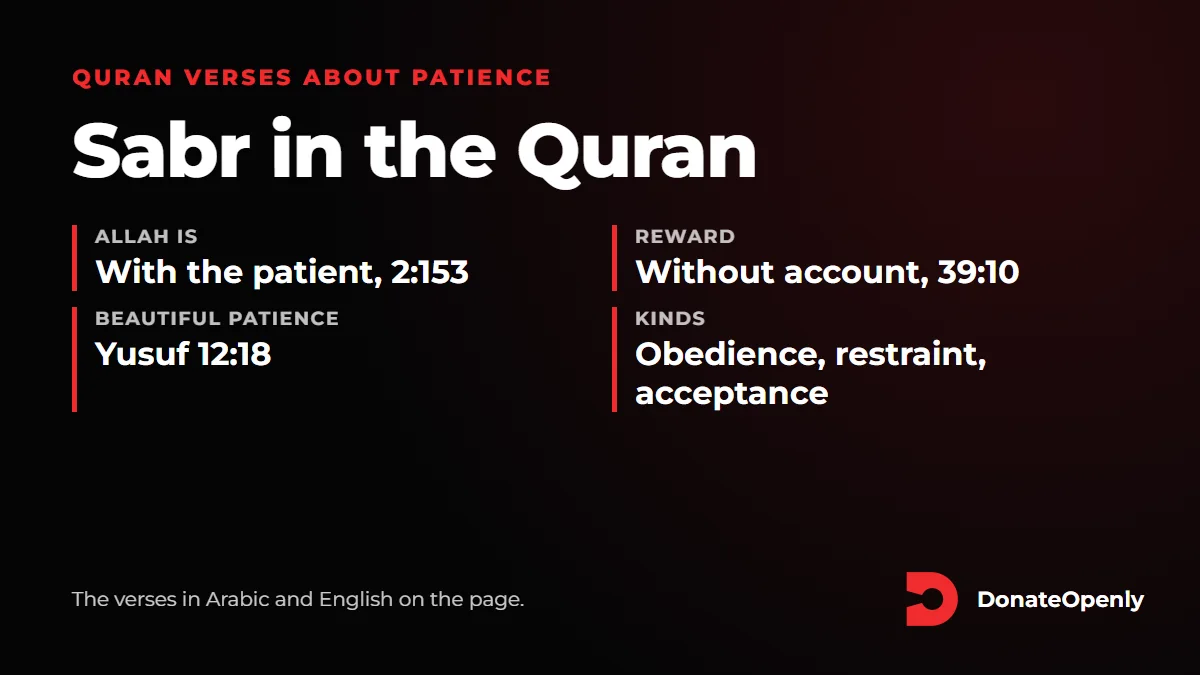
The Quran mentions patience (sabr) many times, and its message is clear: “Indeed, Allah is with the patient” (2:153). Patience is named with prayer as the believer’s help, its reward is “without account” (39:10), and the patient who say “to Allah we belong and to Him we return” receive blessings and mercy from their Lord (2:156-157). Here are the key Quran verses about patience, with references, the three kinds of sabr and how the prophets showed it.
Quran verses about patience in hardship
يَٰٓأَيُّهَا ٱلَّذِينَ ءَامَنُواْ ٱسۡتَعِينُواْ بِٱلصَّبۡرِ وَٱلصَّلَوٰةِۚ إِنَّ ٱللَّهَ مَعَ ٱلصَّٰبِرِينَ ١٥٣
yāayyuhā alladhīna āmanū is'taʿīnū bil-ṣabri wal-ṣalati inna l-laha maʿa l-ṣābirīna
O you who have believed, seek help through patience and prayer. Indeed, Allāh is with the patient.
وَلَنَبۡلُوَنَّكُم بِشَيۡءٖ مِّنَ ٱلۡخَوۡفِ وَٱلۡجُوعِ وَنَقۡصٖ مِّنَ ٱلۡأَمۡوَٰلِ وَٱلۡأَنفُسِ وَٱلثَّمَرَٰتِۗ وَبَشِّرِ ٱلصَّٰبِرِينَ ١٥٥ ٱلَّذِينَ إِذَآ أَصَٰبَتۡهُم مُّصِيبَةٞ قَالُوٓاْ إِنَّا لِلَّهِ وَإِنَّآ إِلَيۡهِ رَٰجِعُونَ ١٥٦ أُوْلَٰٓئِكَ عَلَيۡهِمۡ صَلَوَٰتٞ مِّن رَّبِّهِمۡ وَرَحۡمَةٞۖ وَأُوْلَٰٓئِكَ هُمُ ٱلۡمُهۡتَدُونَ ١٥٧
walanabluwannakum bishayin mina l-khawfi wal-jūʿi wanaqṣin mina l-amwāli wal-anfusi wal-thamarāti wabashiri l-ṣābirīna alladhīna idhā aṣābathum muṣībatun qālū innā lillahi wa-innā ilayhi rājiʿūna ulāika ʿalayhim ṣalawātun min rabbihim waraḥmatun wa-ulāika humu l-muh'tadūna
And We will surely test you with something of fear and hunger and a loss of wealth and lives and fruits, but give good tidings to the patient, Who, when disaster strikes them, say, "Indeed we belong to Allāh, and indeed to Him we will return." Those are the ones upon whom are blessings from their Lord and mercy. And it is those who are the [rightly] guided.
These verses come together in Surah Al-Baqarah: seek help through patience and prayer, know that tests will come, and give good news to the patient.
Inna lillahi wa inna ilayhi raji’un
The words of the patient in verse 156 are the words Muslims say at any loss. See inna lillahi wa inna ilayhi rajiun.
The reward of patience in the Quran
قُلۡ يَٰعِبَادِ ٱلَّذِينَ ءَامَنُواْ ٱتَّقُواْ رَبَّكُمۡۚ لِلَّذِينَ أَحۡسَنُواْ فِي هَٰذِهِ ٱلدُّنۡيَا حَسَنَةٞۗ وَأَرۡضُ ٱللَّهِ وَٰسِعَةٌۗ إِنَّمَا يُوَفَّى ٱلصَّٰبِرُونَ أَجۡرَهُم بِغَيۡرِ حِسَابٖ ١٠
qul yāʿibādi alladhīna āmanū ittaqū rabbakum lilladhīna aḥsanū fī hādhihi l-dun'yā ḥasanatun wa-arḍu l-lahi wāsiʿatun innamā yuwaffā l-ṣābirūna ajrahum bighayri ḥisābin
Say, "O My servants who have believed, fear your Lord. For those who do good in this world is good, and the earth of Allāh is spacious. Indeed, the patient will be given their reward without account [i.e., limit]."
Every good deed has its measure, but the reward of patience is “without account”: beyond any count.
More verses on the reward of sabr
- “And be patient, and your patience is not but through Allah”: An-Nahl 16:127.
- “Persevere and endure… that you may be successful”: Al-Imran 3:200, the last verse of the surah.
- Advising each other to patience: one of the four qualities of those saved from loss in Surah Al-Asr.
Sabrun jamil: beautiful patience
وَجَآءُو عَلَىٰ قَمِيصِهِۦ بِدَمٖ كَذِبٖۚ قَالَ بَلۡ سَوَّلَتۡ لَكُمۡ أَنفُسُكُمۡ أَمۡرٗاۖ فَصَبۡرٞ جَمِيلٞۖ وَٱللَّهُ ٱلۡمُسۡتَعَانُ عَلَىٰ مَا تَصِفُونَ ١٨
wajāū ʿalā qamīṣihi bidamin kadhibin qāla bal sawwalat lakum anfusukum amran faṣabrun jamīlun wal-lahu l-mus'taʿānu ʿalā mā taṣifūna
And they brought upon his shirt false blood. [Jacob] said, "Rather, your souls have enticed you to something, so patience is most fitting. And Allāh is the one sought for help against that which you describe."
When his sons brought Yusuf’s shirt stained with false blood, Prophet Ya’qub said, “patience is most fitting”, in Arabic sabrun jamil, beautiful patience: patience without complaint to people.
Complaining to Allah is not impatience
Years later Ya’qub said, “I only complain of my suffering and my grief to Allah” (Yusuf 12:86). Turning your grief to Allah in dua is part of patience, not against it.
The three kinds of patience
Scholars describe sabr in three forms:
- Patience in obeying Allah: praying on time, fasting, giving when it is hard.
- Patience in keeping away from sin: holding back when temptation is strong.
- Patience with what Allah decrees: illness, loss and hardship, met without anger at His decree.
How to grow in patience
- Remember the verses: recall that Allah is with the patient.
- Pray: the verse joins patience with prayer for a reason.
- Make dua: ask Allah for patience; the Quran teaches “Our Lord, pour upon us patience” (Al-A’raf 7:126).
- Look at the prophets: Ayyub in illness, Yusuf in prison, Ya’qub in grief, and the Prophet ﷺ in Makkah.
Written for DonateOpenly from the sources it cites, and awaiting review by ulama. Dates are worked out from the Islamic calendar and depend on the moon sighting.
Choose a charity, then give on its own website
Every registered UK Muslim charity has a page on DonateOpenly: what it does, where its work reaches people and where donors review it.
Quran verses about patience: questions
What does the Quran say about patience?
That Allah is with the patient, that patience and prayer are our help, and that the patient are rewarded without account (Quran 2:153, 39:10).
Which verse says Allah is with the patient?
“O you who have believed, seek help through patience and prayer. Indeed, Allah is with the patient” (Quran 2:153).
What is sabrun jamil?
Beautiful patience: the words of Prophet Ya’qub in Surah Yusuf 12:18, meaning patience without complaining to people, while turning to Allah.
What is the reward for patience in Islam?
Allah says the patient will be given their reward without account (Quran 39:10), and that blessings and mercy from their Lord are upon them (2:157).
Is there a dua for patience in the Quran?
Yes: “Our Lord, pour upon us patience and let us die as Muslims” (Quran 7:126), the dua of Pharaoh’s magicians after they believed.